# The collected information (brief, optional): Article discusses two distinct areas in digital
The collected information (brief, optional): Article discusses two distinct areas in digital
Advanced computational models, including medical digital twins and large language models (LLMs), are increasingly being explored for their transformative potential in various clinical applications [1] [2] [3]. These technologies promise to enhance patient care through personalized predictions, improved disease monitoring, and a deeper understanding of individual health patterns, though their real-world efficacy requires robust and context-aware evaluation [1] [2] [3].
Summary of the Trend
Advanced computational models are increasingly being explored for their potential to revolutionize clinical healthcare, encompassing both personalized patient management and broader operational improvements. Two significant emerging trends involve the development of medical digital twins for predictive health and the integration of Large Language Models (LLMs) into clinical workflows [1] [2].
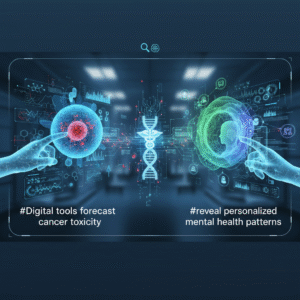
Medical digital twins, which are virtual representations of patient disease, are being developed to forecast disease progression and simulate potential treatments [1]. For instance, mechanistic models have been created to predict therapeutic toxicity, specifically neutropenia, in acute myeloid leukemia (AML) patients undergoing venetoclax and azacitidine treatment [1]. These models leverage patient data like neutrophil counts and blast percentages, demonstrating that identifying patient-specific subsets and continuous data updating can improve predictive accuracy, thus offering a pathway to better monitor and adjust treatment schedules [1].
Concurrently, Large Language Models (LLMs) show transformative promise for reimagining complex workflows within medicine, including clinical decision support, health record documentation and retrieval, and patient communication [2]. These models are seen as having substantial potential to enhance various aspects of clinical practice, although their effective integration and reliable performance in real-world settings remain a key area of ongoing development and evaluation [2].
Critical Analysis
Despite the promising advancements in applying computational models to clinical challenges, significant limitations and risks hinder their reliable integration into practice. While medical digital twins show potential in predicting therapeutic toxicity for acute myeloid leukemia (AML) patients, their patient-specific accuracy remains highly variable [1]. This variability poses a critical challenge for real-world clinical application, as it compromises the models’ reliability in forecasting individual disease progression or simulating treatment effects accurately, even with attempts to identify predictive features or incorporate continuous updating [1]. The inherent difficulty in achieving consistent individual-level precision limits the immediate utility of such models for personalized treatment adjustments, which are urgently needed to manage conditions like prolonged neutropenia [1].
Similarly, the rapid proliferation of Large Language Models (LLMs) in medicine, while holding transformative potential, is significantly undermined by fundamental flaws in their evaluation methodologies [2]. Current comparisons and benchmarks often fail to capture real-world efficacy, leading to a disconnect between research findings and practical clinical utility [2]. A key discrepancy highlighted is the infrequent use of actual electronic health record (EHR) data for evaluation, with only 5% of recent studies employing such real-world data, thereby limiting meaningful assessment of translational impact [2]. This reliance on non-clinical or idealized datasets creates a substantial gap between experimental performance and the demands of robust workflow integration in diverse clinical settings [2].
The breakneck speed of LLM research and dissemination has often outpaced rigorous evaluation, creating a risk of misleading conclusions regarding their capabilities and safety [2]. This lack of rigorous, context-aware evaluations and experimental transparency can obscure whether bespoke, clinically fine-tuned LLMs genuinely outperform general-purpose models or if perceived advantages are artifacts of evaluation design [2]. Consequently, without addressing these systemic evaluation shortcomings, there is a substantial risk of deploying tools with unvalidated real-world utility, potentially leading to a misperception of technological capabilities and compromising patient safety or clinical effectiveness [2].
Implication for Practice or Policy
To effectively integrate advanced digital health solutions into clinical practice, it is imperative for both practitioners and policymakers to champion rigorous, context-aware evaluation and continuous refinement. For predictive tools like medical digital twins, policies should support their development and deployment with mechanisms for continuous data updating to enhance patient-specific accuracy and enable adaptive treatment strategies for conditions such as AML-related neutropenia [1]. Simultaneously, for large language models and similar AI applications, practice guidelines must mandate evaluations that utilize real-world electronic health record data to truly assess efficacy, safety, and utility in clinical settings, thereby bridging the gap between research findings and practical application and ensuring transparency in their capabilities and limitations [2]. This dual approach ensures that technological advancements translate into tangible improvements in patient care rather than remaining theoretical promises.
Closing Reflection
Future advancements in clinical AI will likely hinge on the development of highly personalized tools, such as medical digital twins for toxicity prediction [1] and LLMs for uncovering behavioral patterns in mental health [3]. However, their successful integration into practice will critically depend on rigorous, real-world evaluation methodologies that bridge the gap between research findings and practical clinical utility [2].
Signature
Dr Omar Tujjar – MD, MA, MPH, PGDip, EDAIC, EDRA Consultant in Anaesthesia, Intensive Care, and Pain Medicine National Orthopaedic Hospital Cappagh Dublin, Ireland (++353) 085 1781872