# Global Access Pacts and New Research Bolster Intensive Care Units- Edited by minuj

Global Access Pacts and New Research Bolster Intensive Care Units – Edited by Minu
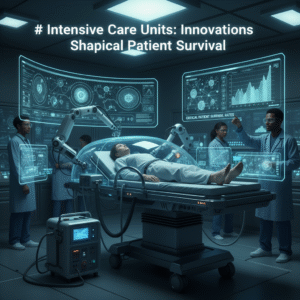
The global health landscape is currently shaped by significant efforts to establish equitable pathogen access and benefit-sharing mechanisms through the WHO Pandemic Agreement and its Pathogens Access and Benefit Sharing (PABS) system [3]. These critical international negotiations, alongside ongoing medical research highlighted in recent literature [1] [2], will likely have far-reaching implications for resource allocation, preparedness, and operational protocols within specialized facilities, including the Intensive Care Unit.
Summary of the Trend
The development of the Pathogens Access and Benefit Sharing (PABS) system is actively progressing as a crucial annex to the broader WHO Pandemic Agreement [3]. This system, which aims to ensure equitable global health responses, has been the subject of dedicated intergovernmental meetings, with the second session convened from September 15-19 to further its elaboration [3].
The primary purpose of the PABS system is to establish safe, transparent, and accountable mechanisms for accessing pathogen materials and their sequence information [3]. Crucially, it also seeks to facilitate the equitable, rapid, and timely sharing of resulting benefits, including vaccines, therapeutics, diagnostics, and other essential countermeasures [3].
Following the adoption of the WHO Pandemic Agreement in May 2025, the World Health Assembly established an open-ended Intergovernmental Working Group (IGWG) with the priority task of drafting and negotiating this PABS annex [3]. The work of this group is scheduled for submission and consideration by the Seventy-ninth World Health Assembly in 2026 [3].
Critical Analysis
The efficacy of global health initiatives and targeted pharmacotherapies, while promising in their respective domains, presents nuanced challenges and limitations when critically assessed through the lens of Intensive Care Unit (ICU) preparedness and resource management. The ongoing development of the Pathogens Access and Benefit Sharing (PABS) system [3] and the introduction of treatments like vericiguat for heart failure [4] offer potential benefits, yet they also highlight risks and counterpoints regarding their direct impact on critical care.
A primary limitation of the PABS system, intended to ensure equitable access to pandemic-related resources [3], lies in its developmental timeline. With negotiations ongoing and final consideration by the World Health Assembly scheduled for 2026 [3], there remains a critical period during which ICUs could be vulnerable to an unforeseen pandemic without a fully operational framework for rapid and equitable sharing of diagnostics, therapeutics, and vaccines. Furthermore, while the system’s objective is to enable transparent access and benefit-sharing [3], the practical challenges of global compliance and enforcement by diverse member states could undermine its effectiveness, potentially leaving ICUs in resource-constrained regions susceptible to overwhelming patient surges despite the agreement’s aspirational goals.
Regarding pharmacotherapy, the VICTORIA trial demonstrated that vericiguat reduced hospitalizations for heart failure with reduced left ventricular ejection fraction (HFrEF) but “without a clear effect on cardiovascular death” [4]. This presents a critical counterpoint for ICUs. While fewer hospitalizations might reduce the overall burden on acute care services, including potential ICU admissions for severe decompensation, the lack of a clear mortality benefit suggests that the most critically ill patients or those facing end-of-life complications may still require intensive care. The drug’s primary benefit in preventing hospitalizations, rather than reducing critical mortality, implies a shift in care management rather than a fundamental reduction in the absolute number of patients requiring the highest level of life-sustaining support.
Therefore, the critical analysis reveals that while advancements like the PABS system [3] and vericiguat [4] are valuable, their direct and immediate impact on alleviating the burdens faced by Intensive Care Units is constrained. The ongoing nature of global policy development and the specific therapeutic profiles of new drugs mean that ICUs must continue to contend with the immediate and complex demands of critical illness, relying on robust infrastructure and agile response capabilities that extend beyond the scope of these particular initiatives.
Implication for Practice or Policy
Policymakers and healthcare administrators must integrate global health initiatives, such as the Pathogens Access and Benefit Sharing (PABS) system [3] and WHO’s influenza vaccine recommendations [4], into local and national intensive care unit (ICU) preparedness strategies. By actively supporting and adopting mechanisms like the PABS system, which aims for equitable and rapid sharing of pathogen materials, diagnostics, and therapeutics [3], healthcare systems can ensure that ICUs have faster access to critical resources needed to treat emerging and severe infections. Furthermore, public health policies should vigorously promote adherence to WHO’s annually updated influenza vaccine compositions [4] to reduce the incidence of severe respiratory illnesses, thereby alleviating potential surges in ICU admissions during seasonal outbreaks and optimizing resource allocation for critical care.
Closing Reflection
As global efforts continue to strengthen pandemic preparedness through systems like PABS [3] and updated vaccine recommendations [4], the critical role of resilient Intensive Care Units in managing future health crises remains paramount. Sustained investment in ICU capacity and staff readiness is therefore essential to translate these international agreements into effective patient care outcomes.
Signature
Dr Omar Tujjar – MD, MA, MPH, PGDip, EDAIC, EDRA Consultant in Anaesthesia, Intensive Care, and Pain Medicine National Orthopaedic Hospital Cappagh Dublin, Ireland (++353) 085 1781872
References
- [1] https://www.who.int/news/item/25-09-2025-member-states-advance-vital-work-in-support-of-who-pandemic-agreement
- [2] https://www.who.int/news/item/26-09-2025-recommendations-announced-for-influenza-vaccine-composition-for-the-2026-southern-hemisphere-influenza-season
- [3] https://www.thelancet.com/journals/lancet/article/PIIS0140-6736(25)01765-9/fulltext?rss=yes