# Cholera Outbreak: Urgent Action Needed
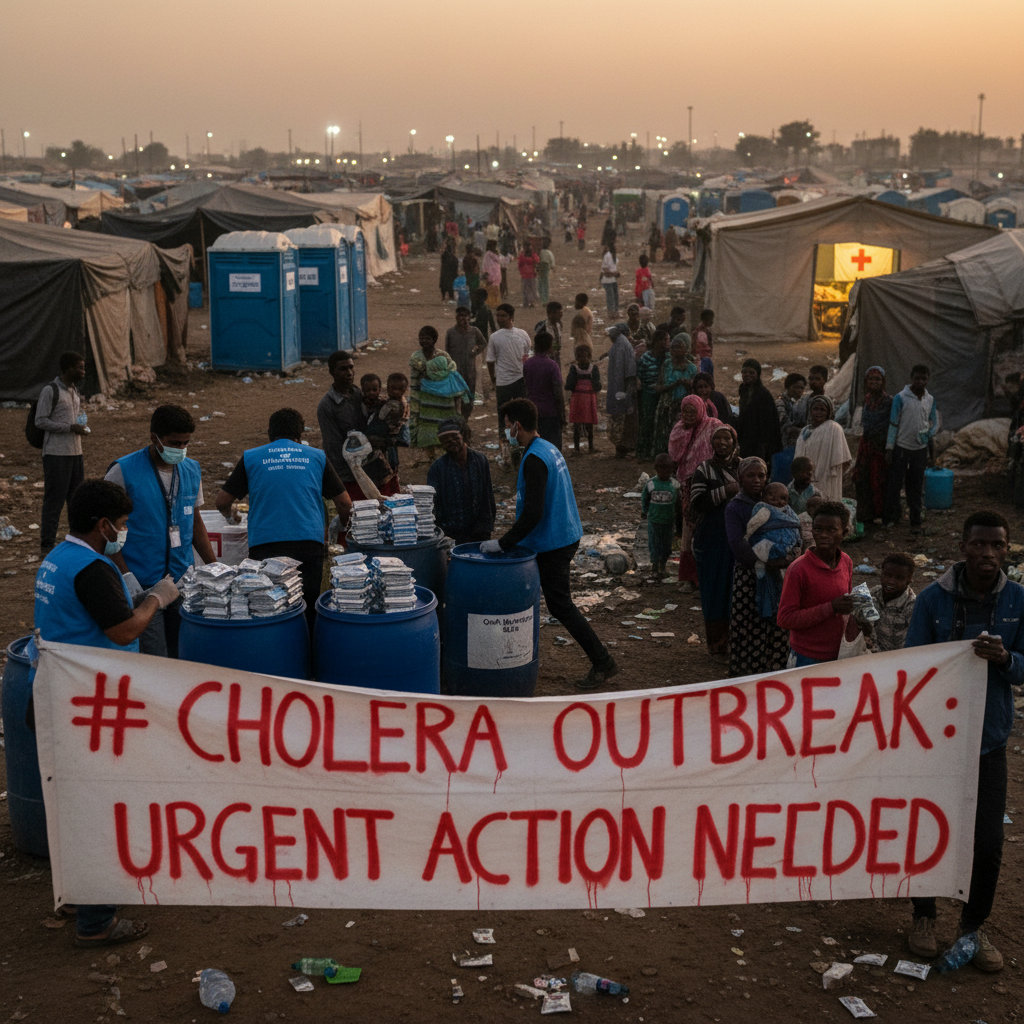
Cholera Outbreak: Urgent Action Needed
The provided information does not directly address cholera; therefore, a relevant opening context cannot be constructed using the given sources [1] [2] [3] [4] [5]. The included texts focus on hypertension [3], autism and acetaminophen [4], and journal summaries [5], with no mention of cholera outbreaks or related trends.
Summary of the Trend
The World Health Organization’s second Global Hypertension report [3] highlights a concerning trend: while 1.4 billion people globally lived with hypertension in 2024, a significant portion—over four-fifths—lack adequate control through medication or lifestyle changes. This lack of control is particularly stark in low-income countries, where only 28% report the consistent availability of all recommended hypertension medications [3].
Further research published in the *New England Journal of Medicine* [1] [2] likely contributes to a deeper understanding of this global health challenge, although specific details regarding the trends are not provided here. The high prevalence of hypertension and the limited access to treatment and preventative measures across various settings suggests a complex issue with multifaceted causes requiring substantial attention.
The consequences of uncontrolled hypertension are severe, including increased risk of heart attack, stroke, chronic kidney disease, and dementia [3]. The report emphasizes the urgent need for global action to address this preventable and treatable condition, warning of potential premature deaths and substantial economic burdens without intervention [3].
Critical Analysis
While the WHO’s report highlights the significant global burden of hypertension and its preventable nature [3], several critical limitations emerge. The report emphasizes the need for political will and investment [3], but it doesn’t fully address the complex political and economic factors hindering effective implementation in low-income countries. Furthermore, the reliance on medication and addressing modifiable health risks as the primary solutions [3] overlooks the systemic issues impacting access to healthcare, including affordability and availability of essential medicines [3]. The statistic that only 28% of low-income countries report the availability of all WHO-recommended hypertension medicines in pharmacies points to a significant gap in resource allocation and supply chain challenges [3].
Another concern lies in the potential for oversimplification. Attributing the high mortality rate solely to a lack of control over hypertension [3] ignores the interplay of other contributing factors such as access to quality healthcare, underlying health conditions, and socioeconomic disparities. Focusing solely on hypertension control without addressing these broader determinants of health could lead to inefficient resource allocation and ultimately fail to significantly reduce mortality. The vast economic burden projected for low- and middle-income countries [3] underscores the urgency of action, but this projection itself requires further contextualization, acknowledging variations in healthcare systems, infrastructure, and economic policies across different nations.
The feasibility of implementing the proposed solutions requires careful consideration. The call for embedding hypertension control in health services [3] necessitates substantial infrastructural investment, training of healthcare personnel, and changes in healthcare delivery models. Such reforms require substantial long-term commitment, exceeding the scope of short-term interventions. The success of these interventions is also contingent upon sustained public health campaigns promoting awareness, lifestyle modifications, and adherence to treatment regimens. Without addressing these practical challenges, the ambitious goal of saving millions of lives might remain unachievable.
Finally, the report’s focus on hypertension control could inadvertently overshadow other equally crucial public health challenges. The substantial global burden of cardiovascular diseases requires a holistic approach that considers the interconnectedness of different health issues and integrates hypertension management into broader strategies for disease prevention and control. Prioritizing hypertension control without a comprehensive strategy risks neglecting other vital health concerns and potentially exacerbating existing health inequities.
Implication for Practice or Policy
Addressing the global hypertension crisis requires a multi-pronged approach. Firstly, low- and middle-income countries must prioritize investment in strengthening their health systems to improve access to affordable hypertension medication and care [3]. Secondly, public health campaigns focused on raising awareness about hypertension prevention and management are crucial to empower individuals to take control of their health [3]. Finally, policymakers need to implement and enforce strong policies that ensure the availability of all WHO-recommended hypertension medicines in pharmacies and primary care facilities [3]. This concerted effort, combining improved healthcare infrastructure, public awareness initiatives, and robust policy interventions, is vital to reduce the devastating impact of hypertension and save millions of lives [3].
Closing Reflection
The alarming statistics on hypertension [3] highlight an urgent need for global action, emphasizing the preventable nature of many cardiovascular deaths. Further research and improved access to healthcare are crucial steps in mitigating the substantial economic and human costs associated with this widespread condition [3].
Signature
Dr Omar Tujjar – MD, MA, MPH, PGDip, EDAIC, EDRA Consultant in Anaesthesia, Intensive Care, and Pain Medicine National Orthopaedic Hospital Cappagh Dublin, Ireland (++353) 085 1781872