# MRI Studies Find No Autism-Acetaminophen Link
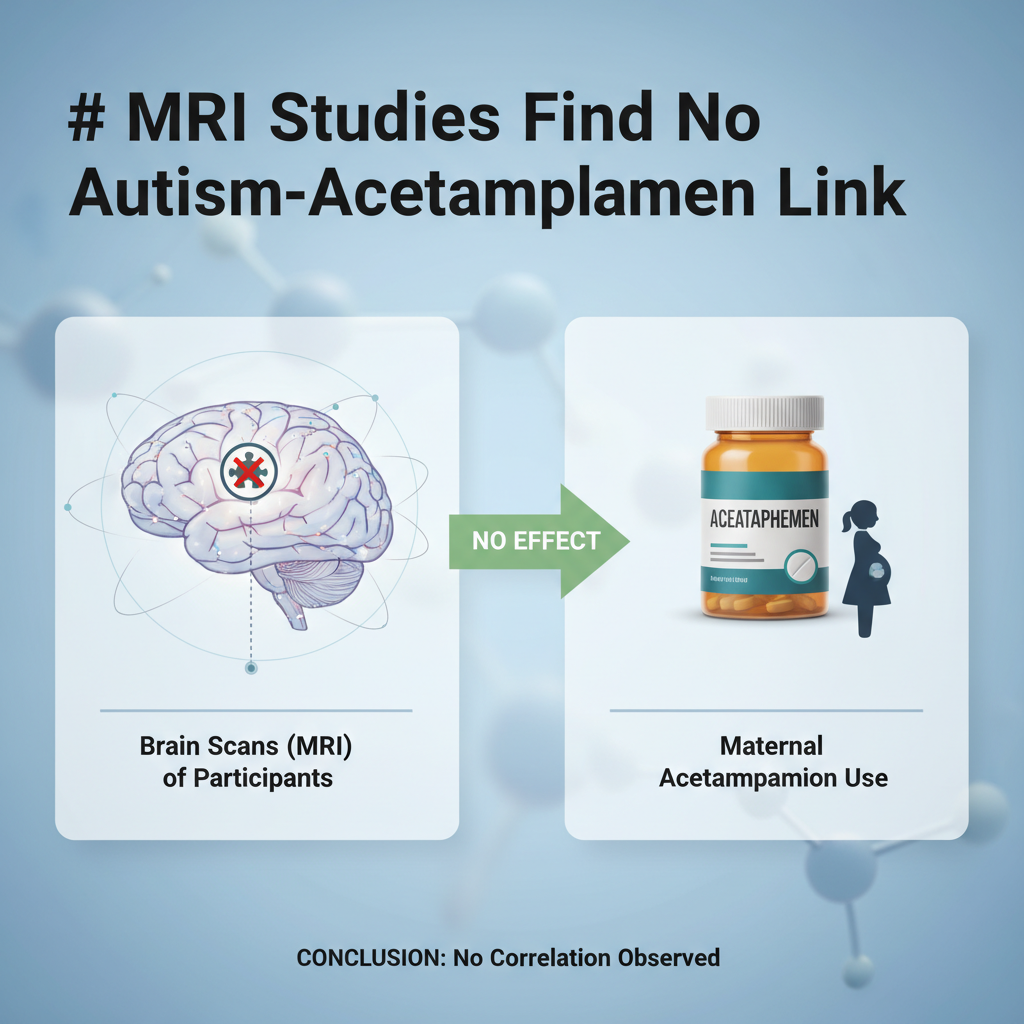
MRI Studies Find No Autism-Acetaminophen Link
The World Health Organization (WHO) highlights the lack of conclusive evidence linking acetaminophen use during pregnancy to autism [2], a condition affecting approximately 1 in 127 people globally [2]. Despite extensive research and large-scale studies investigating this potential link, no consistent association has been established [2].
Summary of the Trend
Extensive research has been conducted over the past decade investigating potential links between various factors and health outcomes. One area of focus has been the relationship between acetaminophen use during pregnancy and the development of autism spectrum disorder [2], a complex neurodevelopmental condition affecting approximately 1 in 127 people globally [2]. However, current scientific evidence does not confirm a causal relationship between these two [2].
Another area of ongoing research and medical practice relates to coronary artery bypass graft (CABG) surgery [4], a common procedure for treating coronary artery disease. CABG offers significant clinical benefits, improving quality of life and reducing cardiovascular events [4]. However, challenges remain, particularly concerning the long-term patency of grafts, which can lead to surgical failure [4]. The success and longevity of CABG procedures continue to be subjects of research and refinement.
While research continues in these and other areas, it’s important to note that the publications mentioned are related to specific medical studies [1] [3] and do not necessarily represent a universal trend across all medical research.
Critical Analysis
While extensive research [2] has investigated potential links between acetaminophen use during pregnancy and autism, and between vaccines and autism, no consistent associations have been established [2]. The lack of conclusive evidence highlights the complexity of autism’s etiology, emphasizing the need for continued research to identify multiple contributing factors [2]. Furthermore, the initial studies suggesting a link between vaccines and autism were flawed and have since been discredited [2]. This underscores the importance of relying on robust, peer-reviewed research and avoiding the dissemination of misinformation.
The absence of a definitive causal link does not negate the importance of cautious medication use during pregnancy [2]. Health professionals should continue to advise pregnant women based on individual circumstances and the latest medical evidence [2], emphasizing the need for a nuanced approach to healthcare. The complexities involved in studying potential environmental influences on autism and the sheer scale of the challenge should also be considered, as large-scale studies have yielded inconclusive results [2]. This emphasizes the need for further research into the multifactorial nature of the condition.
The significant impact of childhood vaccinations on global health [2] should not be overshadowed by unsubstantiated claims. Millions of lives have been saved due to the widespread adoption of childhood vaccination schedules [2]. However, the ongoing efforts to counter misinformation regarding vaccines must be coupled with a transparent and accountable process that addresses any legitimate concerns regarding vaccine safety. The focus should be on maintaining public trust in vaccination while acknowledging the potential for rare adverse events and providing appropriate support for those affected.
Finally, the need for continued vigilance in combating the spread of misinformation about autism and vaccines remains paramount [2]. The potential for harm resulting from unsubstantiated claims is significant, undermining public health initiatives and causing unnecessary anxiety for families. A focus on evidence-based communication and education is vital to address this ongoing challenge.
Implication for Practice or Policy
Addressing the global burden of preventable diseases requires a multi-pronged approach. Investment in robust public health infrastructure, particularly in low- and middle-income countries, is crucial to improve hypertension control rates, which currently lag below 20% in 99 of 195 countries [4]. Furthermore, continued research and public health campaigns are needed to dispel misinformation regarding vaccine safety and autism [2], while simultaneously ensuring equitable access to essential childhood immunizations to prevent the resurgence of preventable infectious diseases [2]. Finally, advancements in cardiac surgery, like CABG, need continuous evaluation and improvement to address long-term patency issues in order to maximize patient outcomes [5].
Closing Reflection
Further research is needed to definitively understand the complex interplay of factors contributing to autism [2], and advancements in imaging techniques like MRI [3] may offer valuable insights in the future. The ongoing evolution of vaccine schedules underscores the importance of evidence-based decision-making in public health [2].
Signature
Dr Omar Tujjar – MD, MA, MPH, PGDip, EDAIC, EDRA Consultant in Anaesthesia, Intensive Care, and Pain Medicine National Orthopaedic Hospital Cappagh Dublin, Ireland (++353) 085 1781872
References
- [1] https://www.who.int/news/item/24-09-2025-who-statement-on-autism-related-issues
- [2] https://www.nejm.org/doi/full/10.1056/NEJMoa2504650?af=R&rss=currentIssue
- [3] https://www.thelancet.com/journals/lancet/article/PIIS0140-6736(25)01718-0/fulltext?rss=yes
- [4] https://www.who.int/news/item/23-09-2025-uncontrolled-high-blood-pressure-puts-over-a-billion-people-at-risk